Face Shape Guide: How to Find Yours and Get Style Recommendations
Knowing your face shape is one of the most practical things you can do for your personal style. It influences which haircuts flatter you, which glasses frames suit your features, which beard styles work, and even how you apply makeup.
The problem is that most people either don't know their face shape or aren't sure how to use that information. This guide covers all six major face shapes, how to identify yours, and what style choices work best for each.
The Six Face Shapes
1. Oval
What it looks like: Slightly wider at the cheekbones, with a forehead that's marginally wider than the jawline. The face tapers gently toward the chin and has a rounded jaw. Length is about one and a half times the width.
How to recognise it: The face appears balanced and elongated without strong angular features. The forehead and jaw are similar in width, with the cheekbones as the widest point.
Style notes for oval faces:
Oval is considered the most versatile face shape — most styles work well because the proportions are naturally balanced. The goal is simply to maintain that balance rather than add excessive width or length.
- Hairstyles: Almost any cut works. Medium-length, long, short, textured — all suit oval faces. Avoid very long, flat styles that drag the face downward.
- Glasses: Most frame shapes work. Avoid oversized frames that overwhelm proportions. Geometric shapes like square and rectangular frames look particularly good.
- Beard (men): Short stubble to medium length works well. Avoid very wide, bushy styles that exaggerate width.
- Makeup contouring: Minimal contouring needed. Light highlight down the nose bridge and on the cupid's bow enhances natural proportions.
2. Round
What it looks like: Width and length are roughly equal. The cheeks are full, the jawline is soft and rounded, and there are no strong angles. The overall silhouette is circular.
How to recognise it: Full cheeks, a rounded chin, and soft contours with no sharp angles. The face appears wide relative to its length.
Style notes for round faces:
The goal is to add the appearance of length and reduce perceived width, creating a more elongated silhouette.
- Hairstyles: Long layers, straight cuts with volume at the crown, side-swept bangs. These add vertical length. Avoid chin-length bobs, blunt cuts across the widest point, and voluminous styles at the sides.
- Glasses: Rectangular and square frames add structure and make the face appear longer. Angular frames work well. Avoid round frames, which emphasise the circular shape.
- Beard (men): A chin strap or goatee adds definition and length to the jawline. Avoid full, round beards that widen the face further.
- Makeup contouring: Contour along the sides of the face and under the cheekbones. Highlight the centre of the forehead and down the nose to draw the eye vertically.
3. Square
What it looks like: Forehead, cheekbones, and jawline are all roughly equal in width. The jawline is strong and angular, with a squared-off chin. The face appears broad and structured.
How to recognise it: Strong, defined jaw. The face has roughly equal width at all three horizontal points — forehead, cheeks, and jaw — giving it a boxy, angular appearance.
Style notes for square faces:
The goal is to soften the strong angles and add the impression of length, while the strong jaw is an asset worth working with rather than hiding.
- Hairstyles: Long layers, waves, and curls soften angular features. Side parts create asymmetry that breaks up the boxiness. Textured, layered cuts. Avoid blunt, one-length cuts and very short styles that emphasise the jaw width.
- Glasses: Round and oval frames soften the angles. Rimless styles also work. Avoid square, rectangular, or boxy frames that mirror the face shape.
- Beard (men): A rounded beard or short, groomed stubble softens the jawline. A chinstrap actually enhances the strong jaw if that's the look you want. Avoid squared-off beard shapes.
- Makeup contouring: Contour the corners of the forehead and along the jaw corners to soften them. Highlight the centre of the face vertically.
4. Heart
What it looks like: Widest at the forehead, tapering to a narrow, pointed chin. The cheekbones sit high, and the jawline comes to a clear point. Sometimes described as an inverted triangle.
How to recognise it: Broad forehead, high cheekbones, and a narrow, pointed chin. The face is widest at the top.
Style notes for heart faces:
The goal is to balance the wider forehead with the narrower chin — adding width at the jaw and reducing visual weight at the top.
- Hairstyles: Chin-length bobs, waves, and styles with volume at the jaw and below are ideal — they balance the narrower lower face. Side-swept bangs reduce forehead width. Avoid voluminous styles at the crown or wide, puffed-up top sections.
- Glasses: Round, oval, and bottom-heavy frames draw attention downward and balance the forehead. Rimless frames work well. Avoid cat-eye frames and styles that are wider at the top.
- Beard (men): A fuller beard at the chin adds volume to the narrow lower face and creates balance. A chinstrap or goatee works particularly well.
- Makeup contouring: Contour the sides of the forehead to reduce its width. Highlight the chin to bring it forward visually. Blush applied toward the ears, not the nose, keeps attention lower.
5. Diamond
What it looks like: Narrow forehead and jawline with very wide, prominent cheekbones. The face is widest at the cheeks and tapers toward both the forehead and chin.
How to recognise it: High, wide cheekbones are the defining feature. The forehead and jaw are both narrow, giving the face a diamond or rhombus shape.
Style notes for diamond faces:
The goal is to add width at the forehead and soften or add width at the chin, letting the striking cheekbones remain the focal point rather than appearing isolated.
- Hairstyles: Volume at the forehead and chin balances the cheekbones. Side-swept bangs widen the forehead. Chin-length bobs add width at the jaw. Avoid styles with volume at the cheek line or heavy layers that sit at the widest point.
- Glasses: Oval and rimless frames suit diamond faces. Cat-eye frames with an upswept outer edge widen the forehead area effectively. Avoid narrow frames that emphasise the cheekbone width.
- Beard (men): A short, rounded beard at the chin widens the narrow jawline. Avoid styles cut very close at the chin that accentuate the narrow jaw.
- Makeup contouring: Highlight the forehead and chin to widen them visually. Subtle contouring under the cheekbones brings their prominence into balance rather than emphasising it further.
6. Oblong (Rectangle)
What it looks like: The face is significantly longer than it is wide, with roughly equal width at the forehead, cheeks, and jaw. Similar to oval but more elongated and with a straighter jawline.
How to recognise it: The face appears tall and narrow. The sides are fairly straight, without much taper, and the jawline is relatively flat rather than rounded.
Style notes for oblong faces:
The goal is to reduce visual length and add the appearance of width, making the face appear shorter and broader.
- Hairstyles: Width at the sides is the priority. Waves, curls, and textured layers that add horizontal volume. Blunt fringes or curtain bangs reduce forehead length. Avoid very long, straight, flat styles that emphasise vertical length.
- Glasses: Wide frames add horizontal presence. Oversized and wide rectangular frames suit oblong faces well. Avoid narrow, small frames that get lost on a longer face.
- Beard (men): A full, wide beard adds width and reduces the perception of length. A chinstrap or goatee emphasises chin length — avoid these.
- Makeup contouring: Contour the forehead at the hairline and the chin to shorten the vertical length. Blush applied horizontally across the cheeks adds width.
How to Determine Your Face Shape
The Manual Method
You'll need a mirror and either a ruler or a soft tape measure. Measure these four distances:
- Forehead width — from hairline temple to temple at the widest point
- Cheekbone width — from the outer corner of one eye to the other, across the widest point of the cheeks
- Jaw width — from the corner of your jaw on one side to the other
- Face length — from the centre of your hairline to the tip of your chin
Then compare:
- Oval: Length > width. Cheekbones are widest. Forehead slightly wider than jaw. Jaw is rounded.
- Round: Length ≈ width. Cheekbones and face length are similar. Rounded jaw.
- Square: Forehead ≈ cheekbones ≈ jaw. Strong, angular jaw.
- Heart: Forehead is widest. Jaw narrows to a point.
- Diamond: Cheekbones are widest. Both forehead and jaw are narrow.
- Oblong: Length significantly greater than width. Roughly equal width at forehead, cheeks, and jaw.
The AI Method
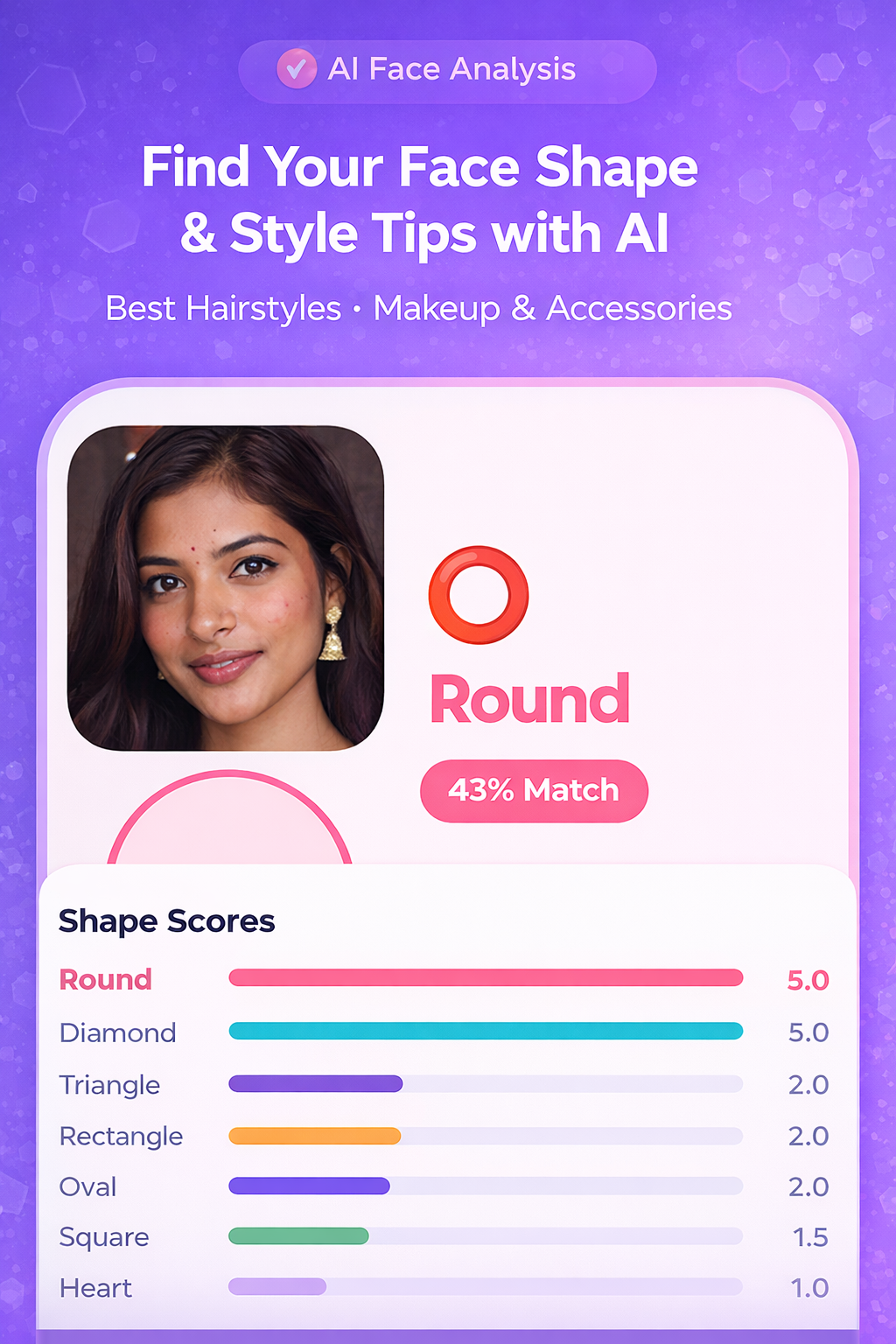
If you'd rather skip the tape measure, an AI face analysis app can determine your face shape from a photo in under a second — using a 468-point face mesh to map your facial landmarks with precision.
Try It: FaceScan
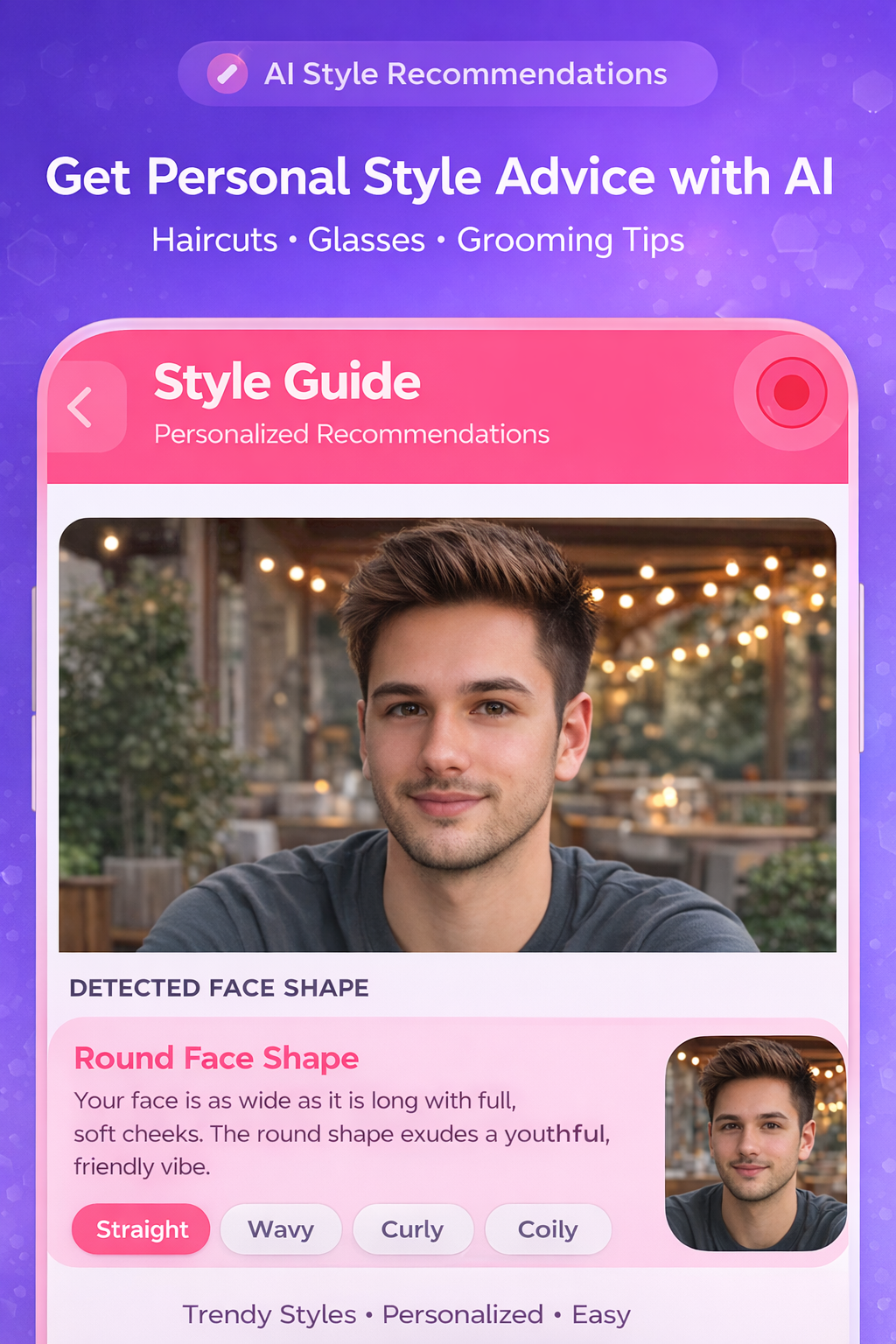
FaceScan detects your face shape automatically using AI-powered facial landmark analysis. Point your camera at your face or select a photo from your gallery — it identifies your shape across all six types and shows the match confidence for each.
Beyond face shape, FaceScan also provides:
- Style guide — personalised style inspiration based on your detected face shape
- Beauty Score — out of 100, based on proportions and symmetry
- Golden Ratio Analysis — how closely your proportions align with φ = 1.618
- Facial Symmetry — left/right balance with visual overlays
- Eye Colour Detection — dominant colour estimation from the iris
- Age Estimator — AI-based age range prediction from facial geometry
- Face Mesh — 468-landmark visualisation you can customise and export
- Face Comparison — side-by-side similarity scoring for two faces
- Photo ID Creator — passport-ready photos with background removal
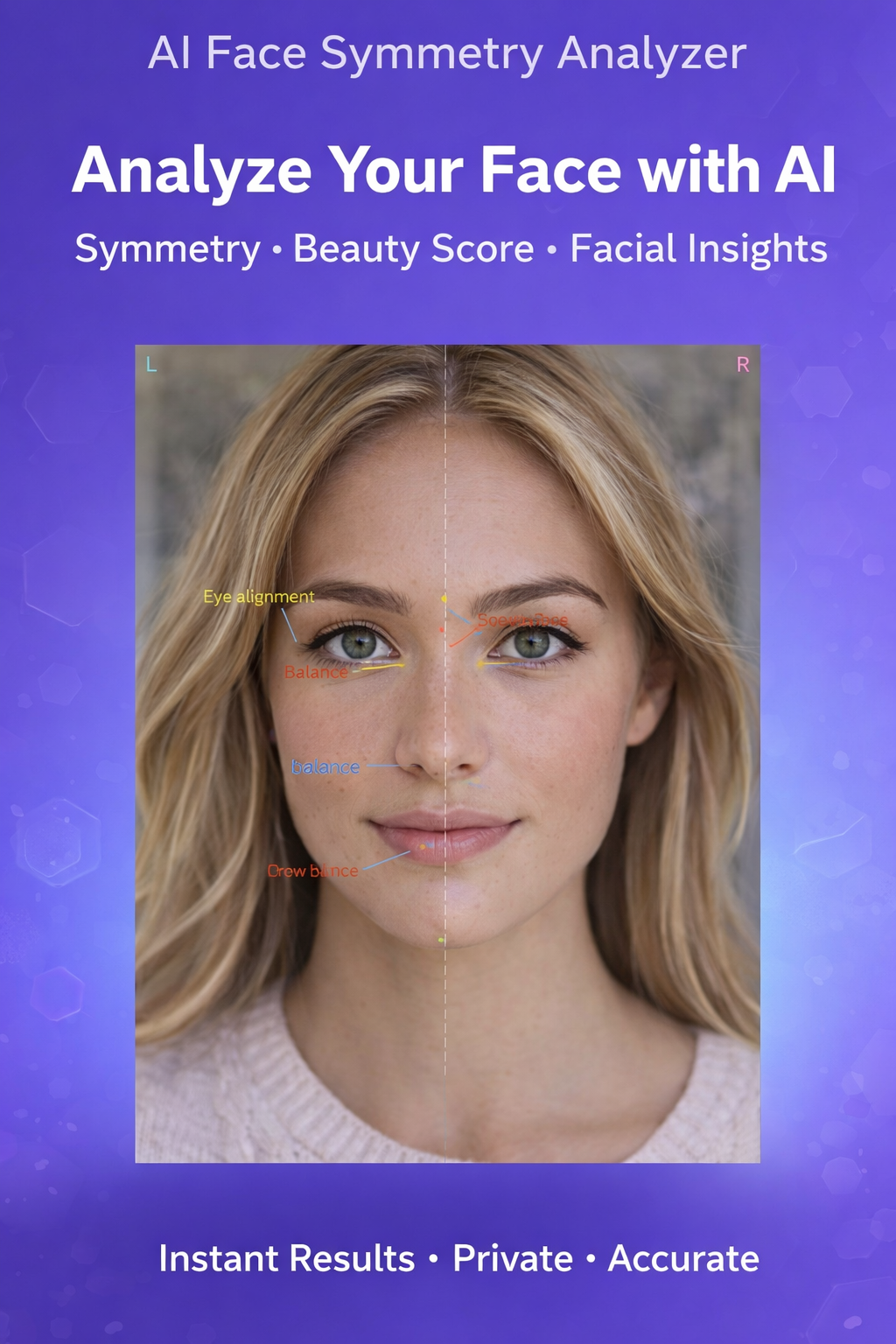

Everything runs on-device. No photos are uploaded. No account required.
↗ Download FaceScan on Google Play — Free
Face Shape Quick Reference
| Face Shape | Key Feature | Add Length? | Add Width? | Soften Angles? |
|---|---|---|---|---|
| Oval | Balanced proportions | No | No | No |
| Round | Equal width & length | Yes | No | No |
| Square | Strong jaw, equal widths | Yes | No | Yes |
| Heart | Wide forehead, narrow chin | No | At jaw | No |
| Diamond | Wide cheekbones | No | At forehead & chin | No |
| Oblong | Long & narrow | No | Yes | No |
Your face shape is one of the most stable features you have — it doesn't change with lighting, expression, or angle the way other features do. Once you know it, every style decision becomes easier: you're no longer guessing which cut or frame to try, you have a starting point grounded in your actual proportions.
↗ Find Your Face Shape with FaceScan — Free on Android
FaceScan results depend on lighting, pose, and image quality. All processing happens on-device. Results are for informational and entertainment purposes.